A strong resume does more than list previous duties. It connects your relevant experience, skills, and results to the opportunity you want. The best resume is clear enough for a recruiter to scan quickly, structured clearly enough for resume-processing software to interpret, and specific enough to show what you can contribute.
This guide explains how to write a resume from the ground up. You will learn how to analyze a job description, choose a format, organize core sections, write stronger bullet points, tailor your content without keyword stuffing, check text readability, and review the final file before submitting it.
Clear formatting can make details such as job titles, dates, skills, and contact information easier for some applicant tracking systems (ATS) to extract. ATS platforms differ by vendor and configuration, however, so no template, keyword strategy, scanner score, or file type guarantees an interview. Your resume still needs to be relevant, accurate, readable, and supported by real evidence.
Start With the Job You Want, Not a Blank Page
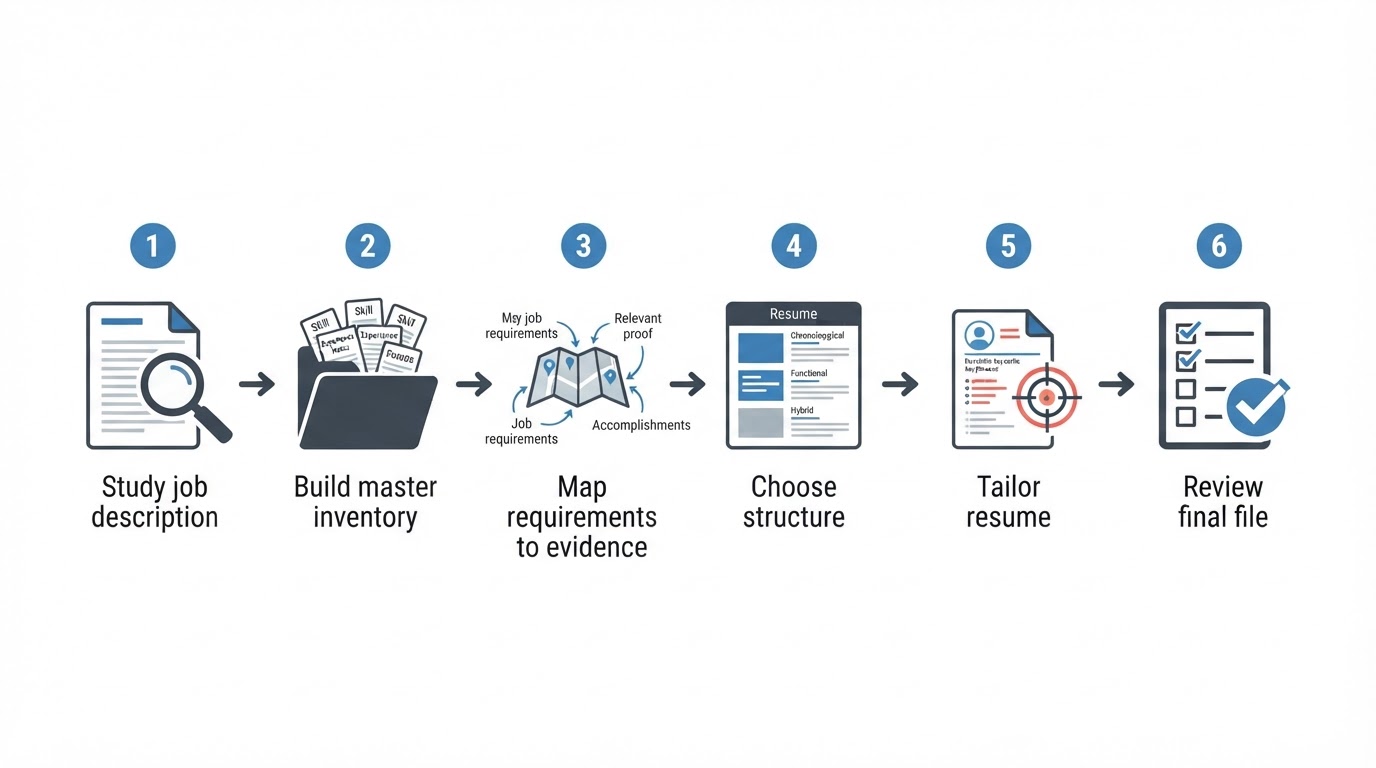
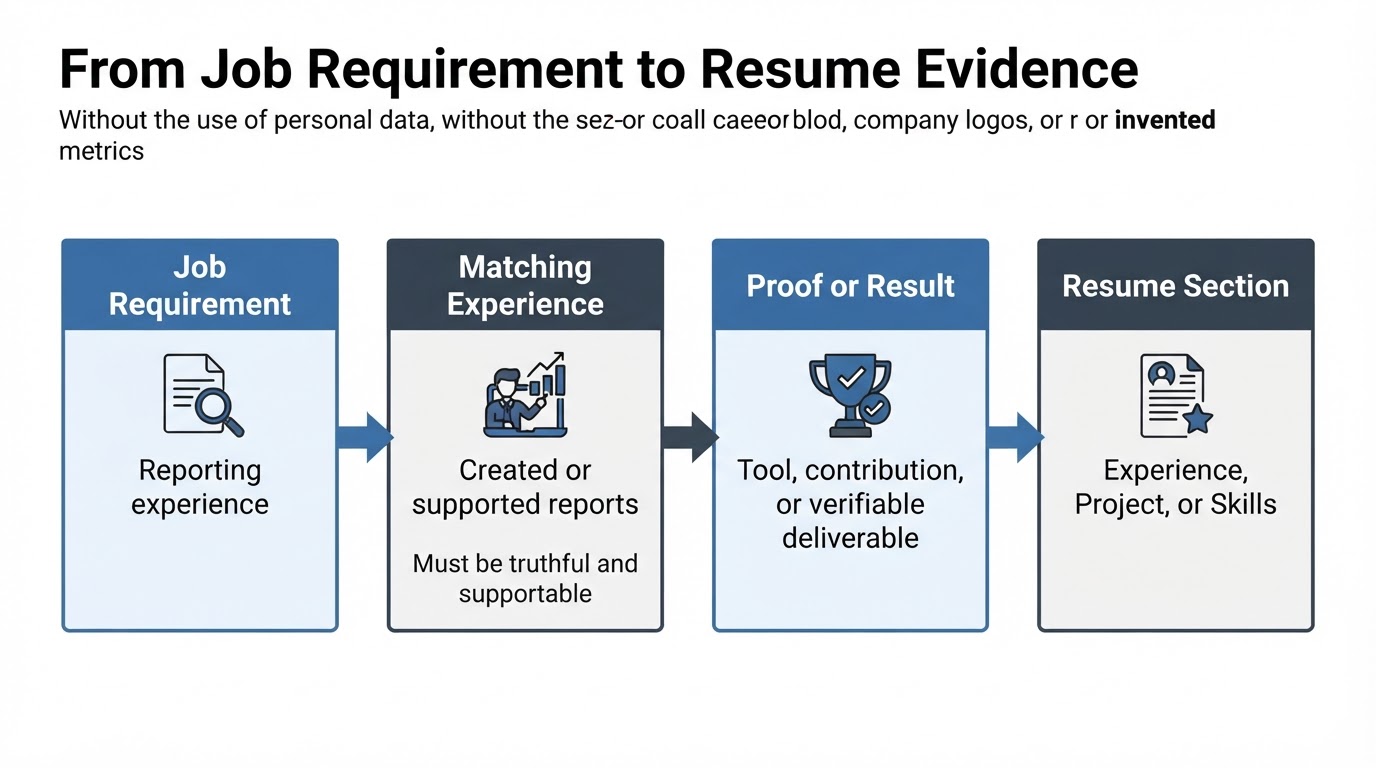
Before opening a template, save the exact job description and study what the employer is asking for. Look for required and preferred qualifications, recurring responsibilities, tools, credentials, and terminology used throughout the posting.
Then create a private master inventory of your background. Include employment, education, projects, freelance work, volunteering, certifications, skills, tools, responsibilities, and measurable outcomes. This inventory is a source of accurate evidence, not necessarily the resume you will submit.
Separate requirements you can support with real experience from those you do not currently meet. Do not add qualifications, tools, metrics, or responsibilities simply because they appear in the job description.
Choose a Resume Format That Makes Your Experience Easy to Follow
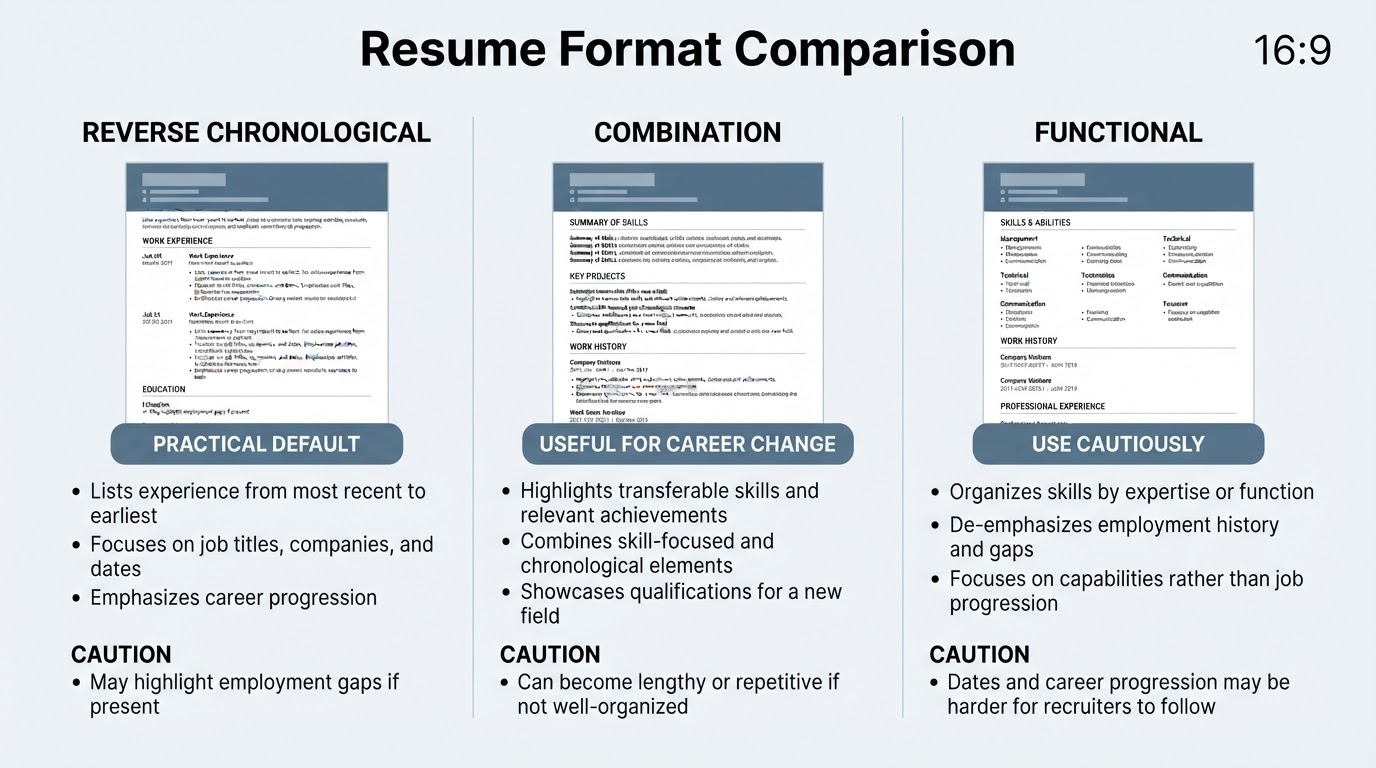
For most applications, reverse chronological format is a practical default. It places your most recent relevant experience first and keeps employers, roles, and dates connected in a structure familiar to many recruiters and resume-processing systems.
A combination format can be useful when transferable skills, projects, or certifications need more emphasis than a conventional work history. Use a purely functional format cautiously because it can make employment history, dates, and career progression harder to understand.
Your structure should also reflect the target industry, application channel, and any instructions provided by the employer.
Build the Core Resume Sections
Use familiar section headings so human readers and software can interpret the document more reliably. Common sections include Summary or Profile, Work Experience, Skills, Education, Projects, and Certifications.
Include only sections that support the target opportunity. Optional sections should add relevant evidence, not simply fill unused space. Keep heading styles, date formats, spacing, and ordering consistent throughout the document.
Write Resume Bullet Points That Show Contribution
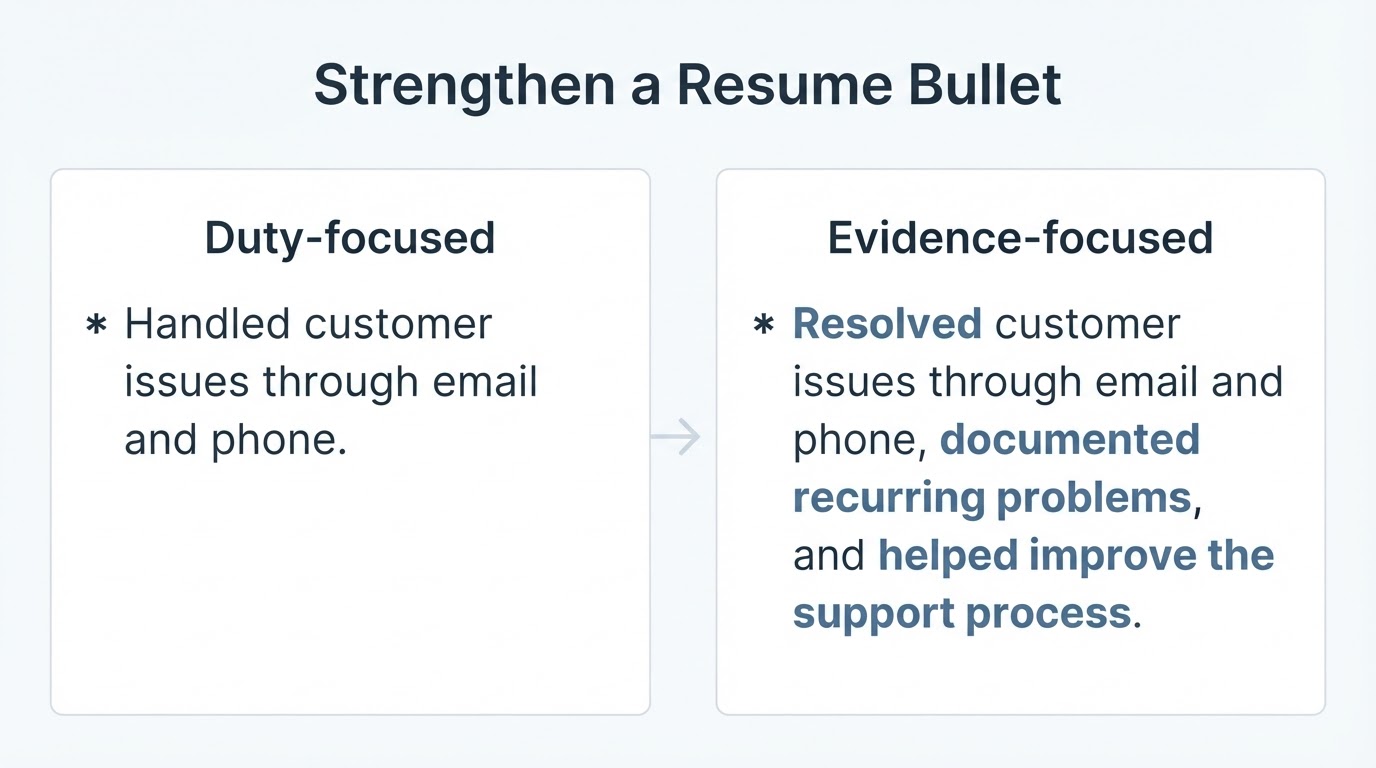
A resume bullet should do more than repeat a job description. It should connect an action to its context, tool, scope, contribution, or result. Start with a clear action and include a measurable outcome when one is available and accurate.
Useful action verbs include created, analyzed, coordinated, improved, documented, supported, delivered, tested, organized, and resolved. Choose words that accurately describe what you did rather than overstating your responsibility.
Job-specific terminology can improve clarity when it truthfully describes your work. Never invent metrics or claim ownership of results you did not produce.
Tailor the Resume Without Keyword Stuffing
Tailoring means selecting and presenting truthful evidence for a specific opportunity. Reflect the job description's relevant language in your summary, skills, experience bullets, projects, and credentials when that terminology accurately describes your background.
Do not copy the job description into your resume. Map important requirements to evidence instead. Use related terms or variations when they improve clarity and accurately describe the same capability.
Avoid unsupported keywords, unnatural repetition, and claims of proficiency you cannot demonstrate. Keywords can help software identify relevant information, but they cannot replace qualifications or convincing evidence.
Make the Resume Readable by ATS Software and People
An applicant tracking system, or ATS, generally helps an employer collect, parse, store, search, or process candidate information. Systems differ substantially in their features and configurations, so formatting guidance should be treated as risk reduction rather than a guarantee of compatibility.
A straightforward layout is a conservative choice when machine readability is a priority. Use readable text, standard headings, consistent spacing, and simple bullets. Relevant content and clear evidence remain more important than trying to optimize for an assumed universal ATS formula.
Adapt the Resume to Your Situation
The same principles apply to different career backgrounds: relevance, evidence, clarity, and truthfulness. What changes is the type of evidence you emphasize. Do not hide important context with a format that makes dates, responsibilities, or progression difficult to understand.
Review Privacy, Accuracy, and Responsible Tool Use
Resume tools can make drafting and checking more convenient, but they also create privacy and accuracy responsibilities. Include only personal information needed for the application and follow the conventions of the target market. Review contact details, portfolio permissions, public-sharing settings, document metadata, and links before submission.
Privacy practices are service-specific. Before uploading a resume to a builder, scanner, or drafting service, review its current privacy policy, terms, retention statements, deletion procedures, data-use disclosures, analytics practices, third-party processors, and account requirements where available. Reviewing a policy does not guarantee confidentiality or deletion.
Do not upload confidential employer, client, customer, or proprietary project information simply to obtain drafting or scanning help. If you use generated wording, verify every claim, date, skill, and result yourself.
Complete a Final Resume Submission Check
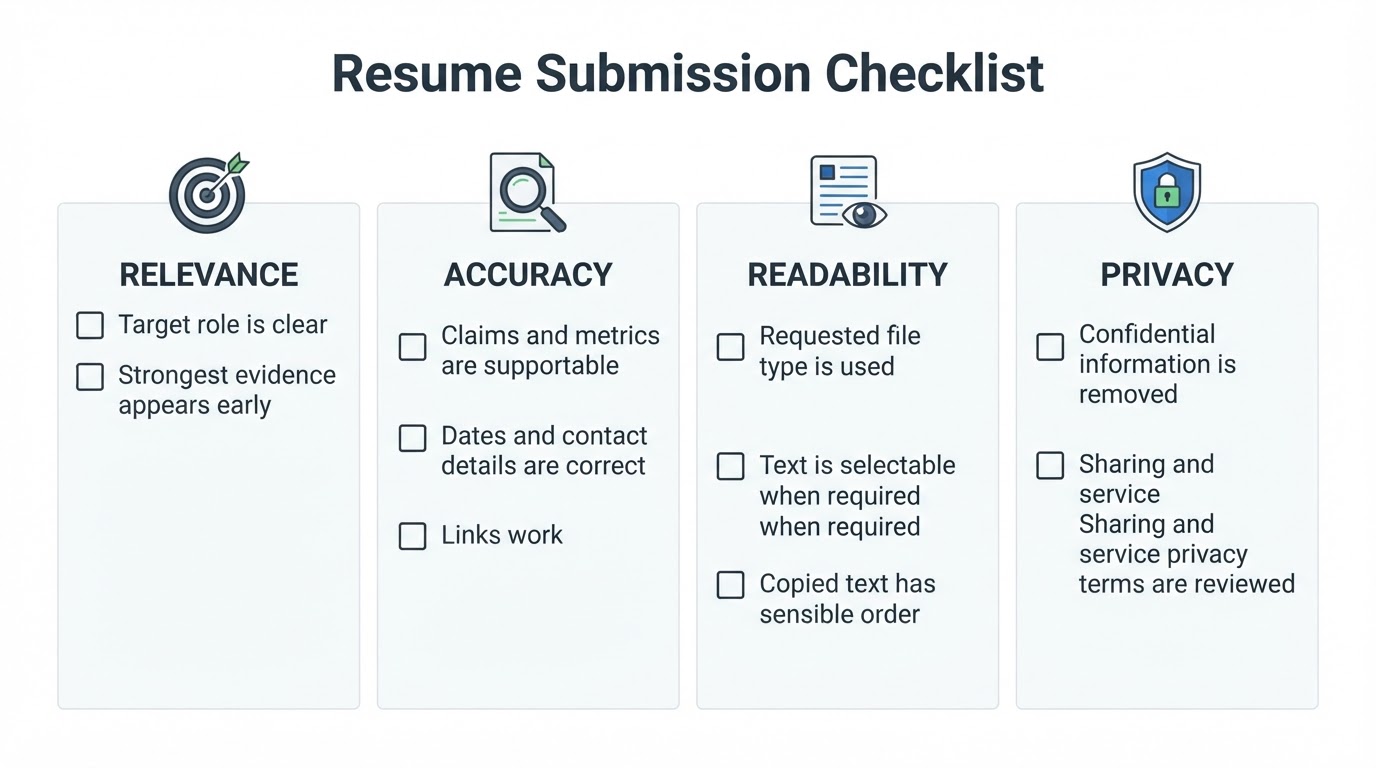
The final review turns a good draft into a reliable application document. Confirm that the resume reflects the target job, uses relevant terminology truthfully, and presents the strongest evidence early.
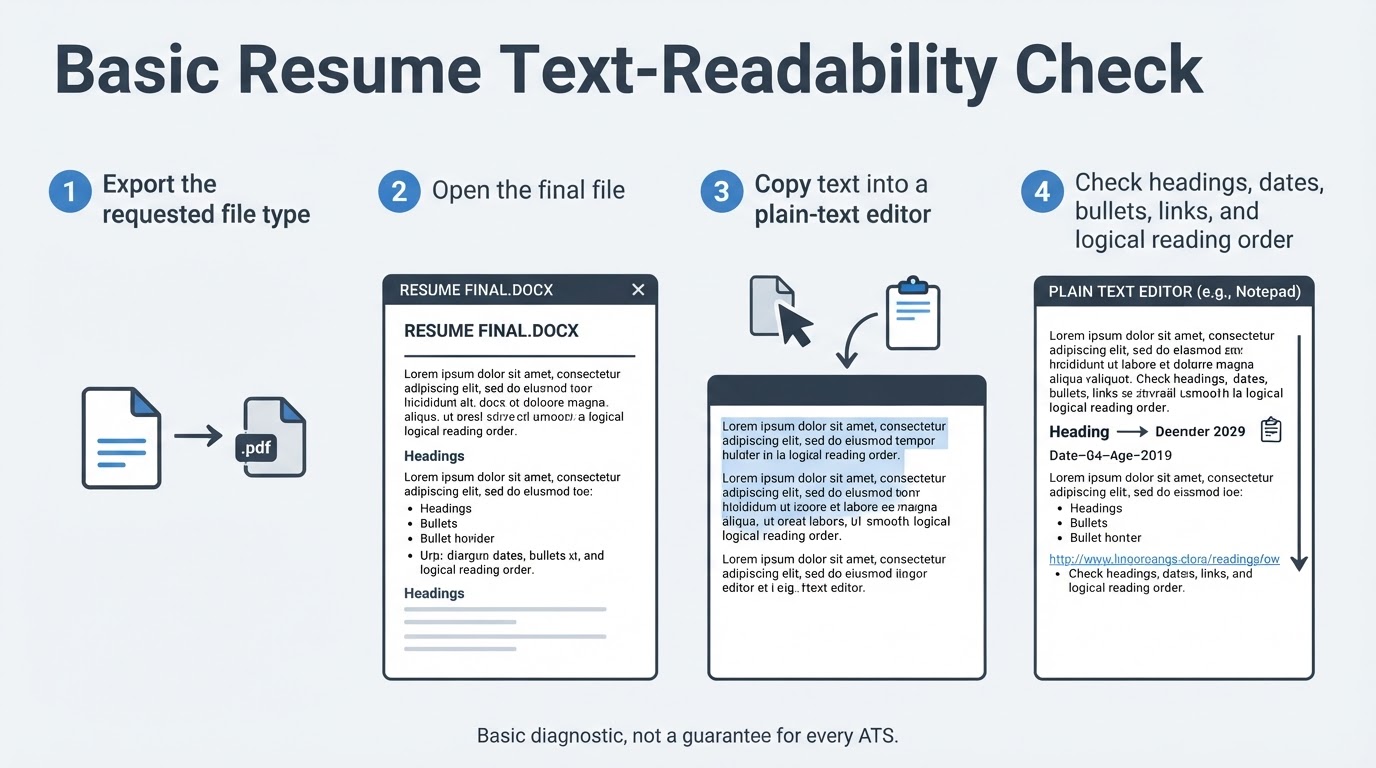
Verify contact details, job titles, employers, dates, education, credentials, links, spelling, and punctuation. Export the requested file type, open the final file, and confirm that it displays correctly. When applicable, make sure the text is selectable and remains understandable when copied into a plain-text editor. Treat this as a basic text-extraction check, not proof that every ATS will interpret the file in the same way.
Use a professional, descriptive file name and check that required attachments or application fields match the resume. Complete a human review instead of relying only on a template, drafting assistant, or scanner.
Conclusion
The most reliable way to write a resume is to start with the target job, map its requirements to truthful evidence, and organize that evidence in a clear structure. For most applications, reverse chronological organization, standard headings, achievement-focused bullets, relevant keywords, and simple text-based formatting provide a practical foundation.
ATS readability can reduce potential extraction problems, but it does not replace qualifications, strong evidence, human review, or accurate tailoring. Before submitting, verify the requested file type, visual appearance, basic text reading order, links, privacy considerations, factual accuracy, and consistency with the application.
A resume is ready when it is easy to understand, relevant to the specific opportunity, and fully defensible in conversation.